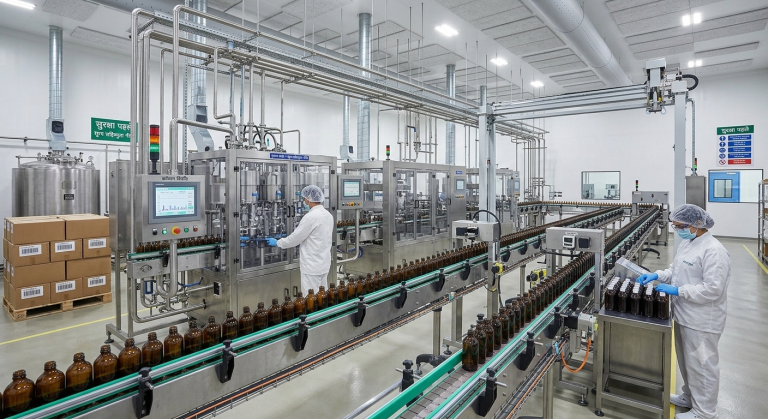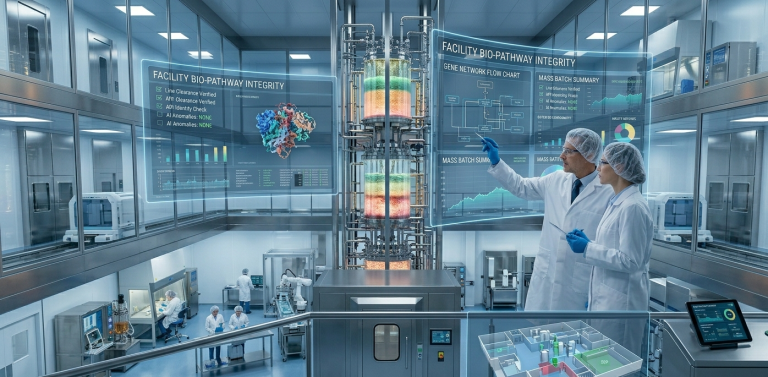
Why Should You Implement AI in Your Pharma Plant in 2026?
earn why pharmaceutical manufacturers are choosing to implement AI in…
Read More
Compliance is no longer just about passing inspections—it’s about staying inspection-ready every day. Discover how AI is transforming pharmaceutical compliance by automating documentation, predicting quality risks, and enabling continuous audit readiness with intelligent platforms like Yuktra.
See Contents
In 2024 alone, the U.S. FDA issued hundreds of warning letters to pharmaceutical and medical device manufacturers, with data integrity, inadequate investigations, poor documentation practices, and quality system failures remaining among the most common observations. For pharmaceutical companies, these are not just regulatory findings. They can delay product approvals, halt production, trigger product recalls, and damage years of trust built with regulators, partners, and patients.
The financial impact is equally significant. Industry estimates suggest that bringing a new drug to market can cost more than $2 billion, making every production delay or compliance failure incredibly expensive. Yet many pharmaceutical manufacturers continue to manage quality processes using disconnected systems, spreadsheets, paper-based records, and manual documentation. As operations expand across multiple facilities and countries, maintaining compliance becomes increasingly difficult.

The consequences are familiar to every quality leader. Weeks before an inspection, teams rush to collect documents, verify training records, close CAPAs, retrieve equipment histories, and ensure SOPs are up to date. Instead of focusing on innovation and operational excellence, valuable time is spent preparing for an event that should never require emergency preparation.
Artificial Intelligence is changing that reality.
Across the pharmaceutical industry, AI is moving compliance from a reactive activity to a continuous operational capability. Instead of asking whether the organization is ready for an inspection, manufacturers are building systems that remain audit-ready every day. An AI-powered, GxP-compliant operating system for pharma manufacturing enables organizations to monitor compliance continuously, identify risks before they become observations, and transform quality management into a strategic advantage rather than a regulatory obligation.
This is not simply automation. It is a new way of managing pharmaceutical operations.
Many organizations believe they are compliant because documentation exists somewhere within the organization.
The real question is different.
Can your team retrieve every required document, explain every quality event, verify every training record, and trace every manufacturing decision within minutes during an inspection?
For many pharmaceutical companies, the answer is more complicated than expected.
Quality records often reside in separate Quality Management Systems, Manufacturing Execution Systems, Laboratory Information Management Systems, ERP platforms, document repositories, spreadsheets, and local storage. Every department maintains its own information, making it difficult to establish a complete picture during regulatory inspections.
The result is an enormous operational burden.
Simplify pharma compliance, automate quality processes, and achieve continuous audit readiness with Yuktra’s AI-powered, GxP-compliant operating system for pharmaceutical manufacturing.
Quality teams spend hours searching for documentation. Engineers manually verify maintenance histories. Training managers confirm employee certifications. Regulatory teams cross-reference multiple systems before responding to inspector requests.
Compliance becomes a manual coordination exercise instead of an intelligent business process.
The pharmaceutical industry has changed dramatically over the last decade.
Manufacturing facilities are becoming increasingly digital. Equipment generates continuous operational data. Production lines rely on connected sensors. Regulatory requirements continue to evolve. Organizations operate across multiple countries with increasingly complex supply chains.
Unfortunately, many compliance processes have not evolved at the same pace.
Most organizations still depend on periodic internal audits, manual reviews, and reactive investigations to maintain regulatory compliance. Problems often remain hidden until an inspection approaches or a quality event forces an investigation.
This traditional approach creates several challenges.
Most importantly, compliance teams spend more time managing information than improving quality.
Artificial Intelligence changes the role of compliance entirely.
Instead of acting as a digital filing cabinet, AI becomes an intelligent assistant capable of understanding relationships between manufacturing processes, quality records, SOPs, equipment histories, deviations, investigations, regulatory requirements, and employee knowledge.
Rather than waiting for users to search through thousands of documents, AI provides contextual answers instantly.
A quality manager can simply ask:
“Show all deviations related to Tablet Compression Line 3 over the last six months.”
“Which SOP governs cleaning validation for this equipment?”
“Are there any overdue CAPAs linked to this batch?”
“Which employees require retraining before the next production campaign?”
Instead of opening multiple applications, AI delivers validated information from connected systems within seconds.
The result is faster decision-making, stronger compliance, and significantly reduced administrative effort.
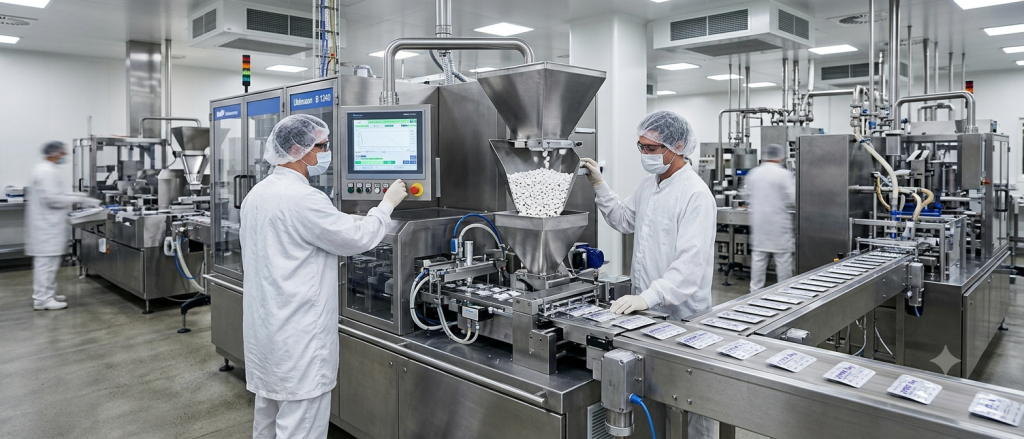
Modern pharmaceutical organizations maintain thousands of controlled documents.
Finding the correct version during an inspection can become surprisingly difficult.
AI indexes every approved document, understands document relationships, tracks revisions, and retrieves the exact information employees need using natural language searches.
Employees spend less time searching and more time following approved procedures.
Training remains one of the most frequent areas reviewed during regulatory inspections.
AI continuously monitors employee qualifications, identifies overdue training, recommends role-specific learning content, and automatically records completion history.
Managers receive proactive notifications before compliance gaps appear rather than after inspections identify them.
Investigating deviations often requires reviewing months of production history, maintenance records, operator logs, and historical quality events.
AI accelerates this process by identifying recurring patterns, comparing previous investigations, recommending likely root causes, and suggesting potential corrective actions based on historical organizational knowledge.
Quality teams can focus on solving problems instead of collecting information.
Corrective and Preventive Actions should prevent recurring problems.
Unfortunately, many organizations manage CAPAs manually.
AI continuously tracks progress, predicts delays, highlights high-risk activities, and alerts stakeholders before deadlines are missed.
Instead of reacting to overdue actions, organizations resolve issues proactively.
Every manufacturing asset produces valuable compliance information.
AI consolidates this information into a single intelligent knowledge base.
When inspectors request equipment history, teams can retrieve complete records instantly instead of searching multiple repositories.
Traditional audit preparation often begins several weeks before inspectors arrive.
AI eliminates much of this preparation because compliance becomes continuous.
Organizations no longer prepare for inspections. They operate in a constant state of readiness.
Perhaps the greatest advantage of Artificial Intelligence is its ability to predict future compliance risks.
Rather than identifying issues after they occur, AI analyzes trends across manufacturing operations to identify early warning signals.
For example, AI can detect:
This allows organizations to prevent compliance failures before regulators ever identify them.
Compliance becomes predictive instead of reactive.
The future of pharmaceutical manufacturing depends on connected intelligence rather than disconnected software.
Compliance information exists across ERP systems, MES platforms, LIMS, QMS, document management systems, maintenance software, and laboratory applications.
When these systems operate independently, valuable knowledge remains trapped.
When connected through AI, they become a unified source of operational intelligence.
Instead of asking employees where information is stored, organizations simply ask AI.
This dramatically improves collaboration between Quality Assurance, Manufacturing, Engineering, Regulatory Affairs, Maintenance, and Operations.
Yuktra was built specifically for pharmaceutical manufacturing, where compliance is not just a regulatory requirement but the foundation of product quality and patient safety.
Rather than functioning as another standalone application, Yuktra serves as an intelligent operational layer that connects quality processes, manufacturing knowledge, equipment intelligence, regulatory documentation, and workforce training into one unified ecosystem. Teams can instantly retrieve SOPs, investigate deviations, monitor CAPAs, access equipment histories, verify training records, and receive AI-powered insights without switching between disconnected systems.
By combining AI with deep pharmaceutical domain expertise, Yuktra enables organizations to move beyond manual compliance management toward continuous regulatory intelligence. As an AI-powered, GxP-compliant operating system for pharma manufacturing, it helps manufacturers reduce audit preparation time, strengthen data integrity, improve operational visibility, and maintain inspection readiness every day.
Move beyond manual compliance and fragmented systems. Discover how Yuktra helps quality teams reduce audit preparation time, improve traceability, and maintain continuous regulatory readiness.
Regulatory expectations will only become more demanding as pharmaceutical manufacturing grows increasingly digital. Organizations that continue relying on fragmented systems and manual documentation will find compliance more expensive, more time-consuming, and more difficult to sustain.
The future belongs to manufacturers that treat compliance as a continuous, intelligent process rather than a periodic exercise. AI is enabling that transformation by connecting people, processes, documents, equipment, and quality data into a single source of truth.
For pharmaceutical leaders, the question is no longer whether AI belongs in compliance. The question is how quickly they can adopt it to stay ahead of evolving regulations, improve operational efficiency, and build a resilient quality culture. With Yuktra, an AI-powered, GxP-compliant operating system for pharma manufacturing, organizations can turn compliance and audit readiness into a lasting competitive advantage rather than a recurring challenge.