How Can AI Powered GxP Compliance Software Bridge the AI Adoption Gap?
Pharma has embraced AI in drug discovery, but manufacturing tells…
Read More
Compliance in the Pharma manufacturing industry is evolving rapidly with the adoption of AI-powered operational systems. This article explores how Yuktra OS helps pharmaceutical manufacturers improve SOP execution, strengthen audit readiness, streamline CAPA workflows, and maintain regulatory compliance through intelligent, real-time manufacturing support.
The pharmaceutical industry operates under some of the strictest regulatory environments in the world. Every manufacturing activity, batch release, deviation investigation, cleaning process, equipment calibration, and training record must comply with frameworks such as FDA 21 CFR Part 11, EU GMP Annex 11, WHO-GMP, and GAMP 5. Because of this complexity, compliance in the Pharma manufacturing industry has evolved from a documentation function into a real-time operational discipline.
Today, pharmaceutical organizations are not only expected to remain compliant during audits but to maintain continuous audit readiness every single day. Regulatory agencies now expect faster access to traceable records, stronger data integrity practices, and immediate visibility into manufacturing processes. Traditional paper-based systems and fragmented software tools are no longer capable of supporting the speed and scale required in modern pharma manufacturing.
This is where intelligent operating systems like YuktraOS are reshaping how regulated manufacturing environments function.
See Contents
Pharmaceutical manufacturing involves thousands of interconnected workflows. Every process must be documented, validated, reviewed, approved, and archived correctly. A single production deviation can trigger multiple downstream activities, including:
As manufacturing facilities expand across multiple sites and product lines, the amount of operational data grows exponentially. Teams often spend more time locating information than acting on it. Operators search through lengthy SOP documents. QA teams manually review deviations. Supervisors rely on tribal knowledge from experienced employees. Compliance gaps emerge not because teams lack expertise, but because the systems supporting them are fragmented and slow.
Explore how Yuktra OS can help your organization streamline compliance workflows, improve audit readiness, enhance SOP execution, and simplify regulated manufacturing operations with AI-powered intelligence.
This operational overload is one of the biggest challenges affecting compliance in the Pharma manufacturing industry today.
Historically, pharmaceutical companies approached compliance as a periodic exercise. Documentation reviews increased before inspections. CAPA backlogs were addressed reactively. Audit preparation became an intensive short-term effort involving multiple departments.
However, regulators now expect continuous readiness.
Manual workflows create several operational risks:
The challenge becomes even greater when organizations rely on disconnected systems for MES, LMS, QMS, document management, and training operations.
To improve compliance in the Pharma manufacturing industry, organizations now require unified intelligence platforms that can connect processes, people, and data in real time.
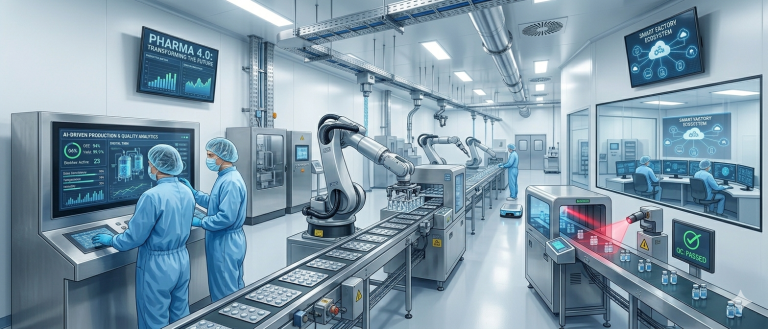
Artificial intelligence is rapidly becoming a foundational technology in pharmaceutical operations. Unlike generic automation platforms, pharma-focused AI systems are designed to work within regulated environments while maintaining traceability and validation controls.
Modern AI-powered compliance systems can:
These capabilities directly strengthen compliance in the Pharma manufacturing industry by reducing operational delays and improving execution accuracy.
Rather than replacing quality teams, AI serves as a real-time operational intelligence layer that enables faster, more compliant decision-making.

The concept of compliance with Yuktra OS focuses on embedding it directly into daily manufacturing operations rather than treating it as a separate administrative process.
YuktraOS is designed as an AI-powered GxP-compliant operating system for pharmaceutical manufacturing environments. According to the platform’s architecture, it combines SOP intelligence, CAPA support, equipment guidance, audit traceability, multilingual workflows, and operator assistance into a single unified ecosystem.
The system transforms static SOPs, OEM manuals, and quality documents into real-time operational intelligence accessible through phones, tablets, industrial PCs, and other connected devices.
This approach significantly improves compliance in the Pharma manufacturing industry because operators no longer depend solely on manual document retrieval or institutional memory.
Instead, they receive:
Every interaction becomes traceable, auditable, and aligned with validated documentation.
One of the biggest operational risks in pharma manufacturing is inconsistent SOP execution.
In many facilities, operators must navigate hundreds of pages of procedural documentation while working under production pressure. Human error, skipped steps, and outdated process understanding can easily lead to deviations.
AI-driven SOP intelligence systems improve compliance in the Pharma manufacturing industry by converting static documents into searchable, guided workflows.
Yuktra IQ, one of the core modules within YuktraOS, enables operators to ask process-related questions in multiple languages and receive cited answers linked directly to approved SOP sections.
This creates several operational benefits:
When every operational answer is tied to a validated source, organizations gain greater confidence in execution consistency.
Corrective and Preventive Actions are central to compliance in the Pharma manufacturing industry. Delayed investigations and unresolved deviations are among the most common regulatory concerns during inspections.
Traditional CAPA workflows often involve multiple disconnected systems, spreadsheets, emails, and manual follow-ups. This slows investigations and increases compliance risk.
AI-powered compliance systems improve CAPA management by:
Yuktra QMS introduces intelligent deviation and CAPA assistance designed specifically for regulated manufacturing operations. The platform can surface root-cause trends and suggest structured CAPA workflows using historical operational knowledge.
This creates measurable improvements in operational efficiency while strengthening compliance in the Pharma manufacturing industry.
Global pharmaceutical manufacturing environments rely on multilingual workforces operating across different shifts and regions.
One major challenge in maintaining compliance in the Pharma manufacturing industry is ensuring that all operators receive consistent procedural understanding regardless of language barriers.
AI-powered multilingual execution systems address this challenge by enabling operators to interact with SOPs and operational guidance in their preferred language while maintaining validated English source records.
YuktraOS supports multilingual interactions, including Hindi, Arabic, Marathi, and several additional languages, while preserving traceability to approved documentation.
This capability helps organizations:
As pharmaceutical manufacturing continues to expand globally, multilingual compliance intelligence will become increasingly essential.
Traditional inspection preparation creates enormous operational stress. Teams often spend weeks organizing records, validating documentation, reconciling training data, and reviewing open deviations before audits.
Modern compliance platforms shift organizations toward continuous readiness.
AI-driven systems support continuous audit readiness by maintaining:
This operational model dramatically improves compliance in the Pharma manufacturing industry because compliance becomes embedded into everyday workflows rather than being activated only before inspections.
Facilities become capable of responding faster to regulatory requests while reducing administrative burden on QA teams.
Another major challenge affecting compliance in the Pharma manufacturing industry is system fragmentation.
Most pharmaceutical organizations operate multiple enterprise systems, including:
Disconnected systems create operational silos that limit visibility and slow compliance workflows.
Platforms like YuktraOS are designed to function as a unified intelligence layer above existing enterprise systems. According to Yuktra’s platform architecture, the solution integrates with systems such as SharePoint, Veeva Vault, TrackWise, SAP, and multiple MES environments.
This integration-first approach improves compliance in the Pharma manufacturing industry without forcing organizations to replace their existing infrastructure.
Discover how Yuktra OS helps pharmaceutical manufacturers improve compliance visibility, reduce operational gaps, simplify audit preparation, and enable intelligent SOP execution across regulated environments.
The future of pharmaceutical compliance will be defined by intelligence, automation, traceability, and continuous operational visibility.
Regulatory expectations are increasing. Manufacturing complexity is growing. Data volumes are expanding rapidly. Manual systems cannot scale effectively in this environment.
Organizations that continue relying on fragmented compliance models may face:
Intelligent compliance operating systems offer a scalable path forward.
By combining AI-driven SOP intelligence, audit-ready workflows, multilingual guidance, and real-time process support, organizations can create more resilient and inspection-ready manufacturing environments.
The shift toward compliance with Yuktra OS demonstrates how pharmaceutical manufacturers are beginning to move from reactive compliance management to proactive operational intelligence. The capabilities highlighted on the Yuktra compliance reflect a broader industry transformation where compliance becomes embedded into every operational interaction rather than isolated within documentation workflows. As regulatory expectations continue to evolve, intelligent execution platforms will play a central role in strengthening compliance in the Pharma manufacturing industry for the next generation of pharmaceutical manufacturing.
Further, recommend reading details on 21 CFR Part 11 in Pharma.