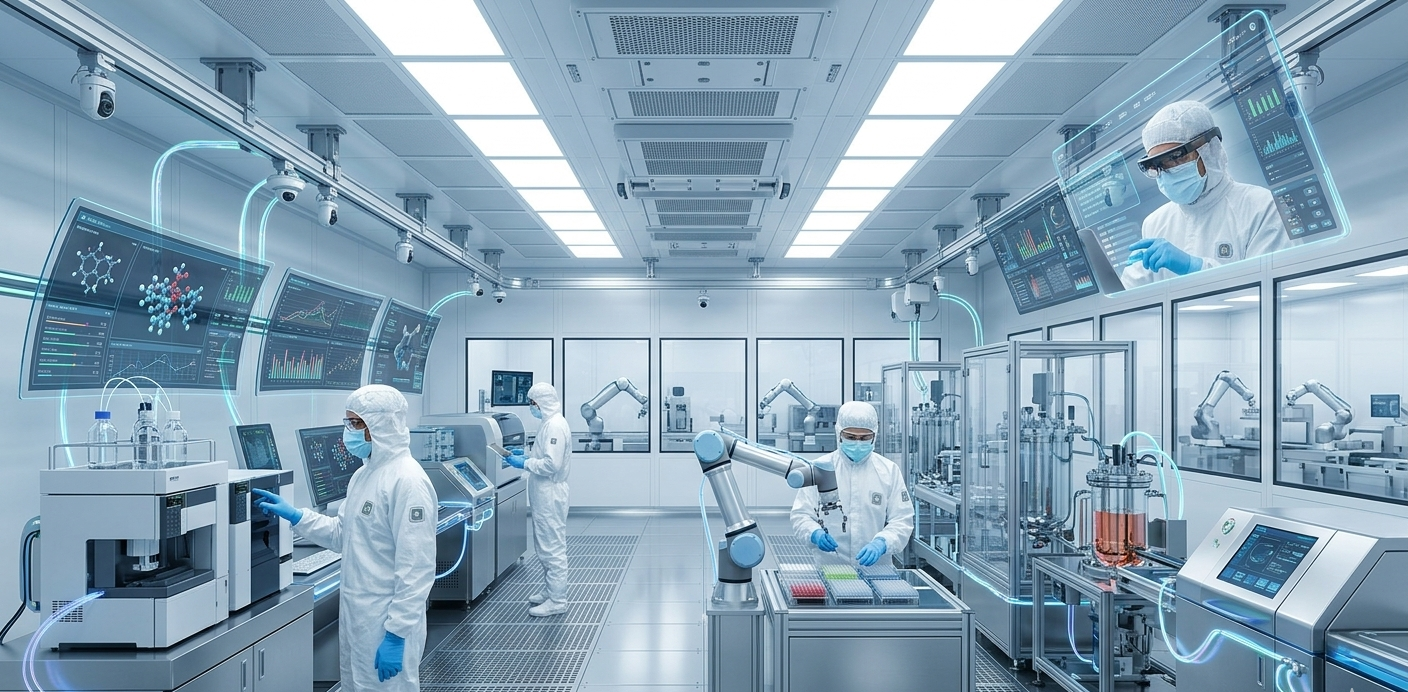
Advanced Technology Integration in Pharma – Transforming the Future of Drug Manufacturing and Healthcare
Learn how advanced technology integration in pharma is reshaping drug manufacturing, compliance, quality assurance, and digital transformation across the pharmaceutical industry.
See Contents
- 1 Overview
- 2 Ready to Accelerate Digital Transformation in Pharma?
- 3 What is Advanced Technology Integration in Pharma?
- 4 Why Pharma Companies Are Investing in Advanced Technologies
- 5 Artificial Intelligence Driving Pharmaceutical Innovation
- 6 Industrial IoT and Smart Manufacturing
- 7 Digital Twins Revolutionizing Pharma Operations
- 8 Cloud Computing Enhancing Data Accessibility
- 9 Advanced Analytics for Better Decision Making
- 10 Automation Improving Compliance and Efficiency
- 11 Enhancing Regulatory Compliance Through Technology
- 12 Workforce Training in the Digital Pharma Era
- 13 Future Trends in Advanced Technology Integration in Pharma
- 14 Modernize Your Pharmaceutical Operations with Confidence
- 15 Conclusion
Overview
The pharmaceutical industry is undergoing a major transformation driven by digital innovation, automation, and intelligent systems. As global healthcare demands continue to grow, pharmaceutical companies are increasingly investing in advanced technology integration in pharma to improve efficiency, quality, compliance, and patient outcomes. From artificial intelligence and cloud computing to industrial IoT and digital twins, modern technologies are reshaping how pharmaceutical products are developed, manufactured, and delivered.
Today, the integration of advanced technology in pharma is no longer a competitive advantage alone. It has become a strategic necessity for organizations aiming to remain compliant, innovative, and profitable in a rapidly evolving market.
Ready to Accelerate Digital Transformation in Pharma?
Discover how advanced technology integration can help your pharmaceutical organization improve compliance, streamline manufacturing, enhance quality management, and unlock new levels of operational efficiency. Connect with Emorphis Health experts to explore tailored digital solutions for your business.
What is Advanced Technology Integration in Pharma?
Advanced technology integration in pharma refers to the implementation and seamless connection of modern digital technologies across pharmaceutical operations. These technologies support various processes, including research and development, manufacturing, quality assurance, supply chain management, regulatory compliance, and workforce training.
By integrating multiple technologies into a unified ecosystem, pharmaceutical companies can create intelligent, data-driven environments that improve decision-making and operational excellence.
Examples of technologies involved include:
- Artificial Intelligence (AI)
- Machine Learning (ML)
- Industrial Internet of Things (IIoT)
- Cloud Computing
- Digital Twins
- Predictive Analytics
- Robotics and Automation
- Electronic Batch Records (EBR)
- Manufacturing Execution Systems (MES)
- Augmented Reality (AR) and Virtual Reality (VR)
The growing adoption of these technologies demonstrates the importance of advanced technology integration in pharma for modern pharmaceutical organizations.
Why Pharma Companies Are Investing in Advanced Technologies
The pharmaceutical sector operates under strict regulations while maintaining high standards of product quality and patient safety. Traditional manual processes often create bottlenecks, increase compliance risks, and limit operational visibility.
Advanced technology integration in pharma addresses these challenges by enabling:
- Real-time monitoring of manufacturing operations
- Automated quality management
- Faster product development cycles
- Reduced human errors
- Improved regulatory compliance
- Better workforce productivity
- Enhanced data integrity
Organizations that embrace pharmaceutical digital transformation are better positioned to respond to changing market demands while maintaining compliance with global standards.
Artificial Intelligence Driving Pharmaceutical Innovation
Artificial Intelligence has become one of the most impactful components of advanced technology integration in pharma.
AI-powered systems help pharmaceutical organizations analyze vast amounts of data, identify patterns, and generate actionable insights. These capabilities are particularly valuable in drug discovery, clinical research, and manufacturing optimization.
AI applications in pharma include:
a. Drug Discovery Acceleration
Researchers can use AI algorithms to analyze molecular structures, predict drug interactions, and identify promising compounds faster than traditional methods.
b. Predictive Maintenance
AI monitors equipment performance and predicts potential failures before they occur, reducing downtime and maintenance costs.
c. Quality Control
Machine learning models can detect deviations in production processes, helping maintain product consistency and regulatory compliance.
As pharmaceutical companies continue investing in AI-driven solutions, advanced technology integration in pharma will become increasingly intelligent and autonomous.

Industrial IoT and Smart Manufacturing
Industrial Internet of Things (IIoT) technologies are creating connected pharmaceutical manufacturing environments.
Sensors installed across production facilities continuously collect operational data related to:
- Temperature
- Humidity
- Pressure
- Equipment performance
- Production output
Through advanced technology integration in pharma, this real-time data can be analyzed instantly, allowing manufacturers to identify issues before they impact production quality.
Smart manufacturing environments provide:
- Enhanced operational visibility
- Reduced process variability
- Improved asset utilization
- Faster issue resolution
- Better compliance monitoring
The integration of IIoT is becoming a foundational element of pharmaceutical manufacturing automation.
Digital Twins Revolutionizing Pharma Operations
A digital twin is a virtual representation of a physical asset, process, or manufacturing facility.
One of the most exciting developments in advanced technology integration in pharma is the use of digital twin technology to simulate manufacturing environments and predict operational outcomes.
Benefits include:
- Process optimization before implementation
- Reduced production risks
- Improved product quality
- Faster scale-up of manufacturing operations
- Enhanced decision-making
Pharmaceutical manufacturers can test process changes in a virtual environment before making adjustments on the production floor, reducing both costs and risks.
Cloud Computing Enhancing Data Accessibility
Modern pharmaceutical companies generate enormous volumes of data every day. Managing this information efficiently requires a scalable and secure infrastructure.
Cloud computing plays a critical role in the integration of advanced technologies in pharma by providing centralized access to data, applications, and analytics tools.
Key advantages include:
- Improved collaboration across global teams
- Faster access to critical information
- Reduced IT infrastructure costs
- Enhanced cybersecurity capabilities
- Scalable storage solutions
Cloud-based pharmaceutical platforms support digital transformation initiatives while ensuring regulatory compliance and data integrity.
Advanced Analytics for Better Decision Making
Data has become one of the most valuable assets in the pharmaceutical industry.
Through advanced technology integration in pharma, organizations can leverage advanced analytics tools to transform raw data into meaningful insights.
Applications include:
- Production performance analysis
- Supply chain optimization
- Demand forecasting
- Regulatory reporting
- Quality trend analysis
Advanced analytics enables pharmaceutical leaders to make informed decisions based on real-time operational intelligence rather than historical assumptions.
Automation Improving Compliance and Efficiency
Automation continues to be a major driver of advanced technology integration in pharma.
Automated systems reduce manual intervention and improve consistency across pharmaceutical operations.
Examples include:
1. Electronic Batch Records
Electronic documentation eliminates paper-based records and improves traceability.
2. Automated Quality Checks
Automated inspection systems can identify defects with greater accuracy and speed than manual methods.
3. Robotic Process Automation
Routine administrative and compliance tasks can be automated, allowing employees to focus on higher-value activities.
Automation not only improves productivity but also strengthens compliance with regulatory requirements.
Enhancing Regulatory Compliance Through Technology
Regulatory compliance remains one of the most important priorities for pharmaceutical organizations.
Advanced technology integration in pharma helps companies maintain compliance through:
- Automated audit trails
- Real-time documentation
- Electronic signatures
- Data integrity controls
- Compliance monitoring dashboards
Technology-driven compliance systems reduce the risk of regulatory violations while improving inspection readiness.
As global regulations continue to evolve, digital compliance solutions will become even more critical.
Workforce Training in the Digital Pharma Era
Technology adoption is not limited to equipment and software. Workforce development is equally important.
Modern pharmaceutical companies are using:
- AI-powered training platforms
- Digital knowledge management systems
- Virtual reality simulations
- Mobile learning applications
- Multilingual digital assistants
These solutions ensure employees remain aligned with evolving standard operating procedures and regulatory requirements.
The success of advanced technology integration in pharma depends heavily on creating a digitally empowered workforce capable of leveraging modern tools effectively.
Future Trends in Advanced Technology Integration in Pharma
The future of advanced technology integration in pharma will be shaped by several emerging innovations:
a. Generative AI
Generative AI will support research, documentation, regulatory submissions, and knowledge management.
b. Autonomous Manufacturing
AI-driven systems will increasingly manage production processes with minimal human intervention.
c. Digital Compliance Platforms
Integrated compliance ecosystems will automate audits, inspections, and reporting activities.
d. Hyperconnected Smart Factories
Future pharmaceutical facilities will combine AI, IoT, robotics, and analytics into fully connected manufacturing environments.
e. Personalized Medicine
Advanced technologies will enable more precise and individualized treatment approaches based on patient-specific data.
These advancements will continue driving efficiency, innovation, and patient-centric healthcare solutions.
“`html
Modernize Your Pharmaceutical Operations with Confidence
From AI-powered manufacturing and compliance automation to intelligent quality management and connected factory ecosystems, the future of pharma is digital. Partner with Emorphis Health to implement advanced technologies that improve efficiency, ensure regulatory compliance, and accelerate innovation across your organization.
Conclusion
The pharmaceutical industry is entering a new era of digital transformation. Advanced technology integration in pharma is helping organizations improve manufacturing efficiency, strengthen regulatory compliance, enhance product quality, and accelerate innovation. By combining technologies such as artificial intelligence, cloud computing, industrial IoT, automation, and advanced analytics, pharmaceutical companies can build smarter and more resilient operations.
As the industry moves toward intelligent manufacturing and data-driven decision-making, advanced technology integration in pharma will remain a key driver of competitive advantage and sustainable growth. Organizations that invest in these technologies today will be better prepared to meet future healthcare challenges while delivering safer and more effective products to patients worldwide.
Before embarking on a digital transformation journey, pharmaceutical organizations should explore the latest technology solutions available for compliance, manufacturing optimization, workforce training, and quality management. Expert technology partners such as Emorphis Health can help organizations design, implement, and scale innovative digital solutions that accelerate pharmaceutical transformation and long-term business success.
Further, do recomend to read detail on Pharma Manufacturing Company Audit Software, The Complete Guide to Smarter, Faster Compliance.